Everything needed to start the Ancient art of Iaido
Clothing and Equipment in Iaido
Below you can read about and have an idea of the standard and advanced equipment needed and used in the practice of Iaido. Beginners can start just in a comfortable t-shirt and sweater preferably with long trousers. For the first period of practice a wooden reproduction of the Katana, called a "bokken" will be used. It exists in versions both with or without scabbard and it is a very safe training tool; in ancient times it was even considered a weapon itself. Also strongly recommended at any level are knee protectors, preferably of a spongy/comfortable material, as a considerable amount of techniques starts or ends on the floor, in particular the older forms of Muso Shinden ryu. The official uniform is comprised of Iaidogi, Hakama and Obi. Later on in practice a Iaito, or unsharpened composite metal reproduction of the Katana, will be used. Advance practitioners and experts, after years of constant practice (usually after Yondan), might switch eventually to a real, razor-sharp Katana for their Iaido practice, depending also on the legal/regulatory possibilities in the Country of practice. At Iaido's highest levels, during demonstrations, exams and competitions, also a Haori overjacket boasting one's Sensei's "mon" or logo, will be worn, together with a striped Hakama.
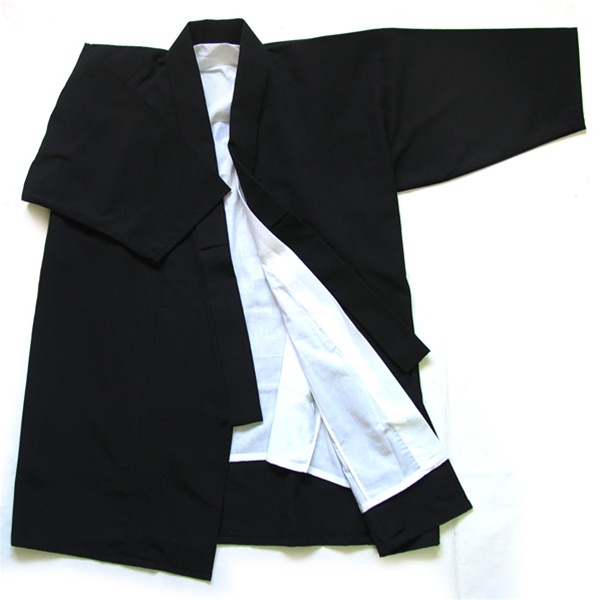
The Iaidogi, a jacket derived from Japanese kimonos, is the proper clothing for the upper body during practice. Some people also wear a white underjacket (optional, also pictured). It is normally all white or all black.
|
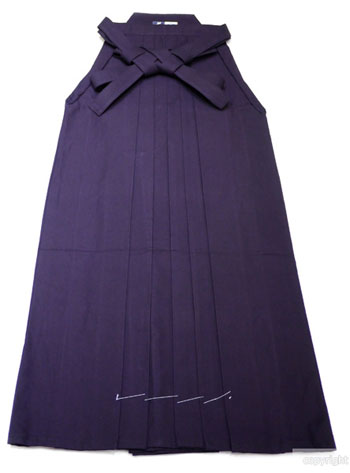
The Hakama is a skirt-trouser clothing element traditionally worn by Samurais. It is normally all white or all black for Iaido practice, matching the same color of the Iaidogi.
|
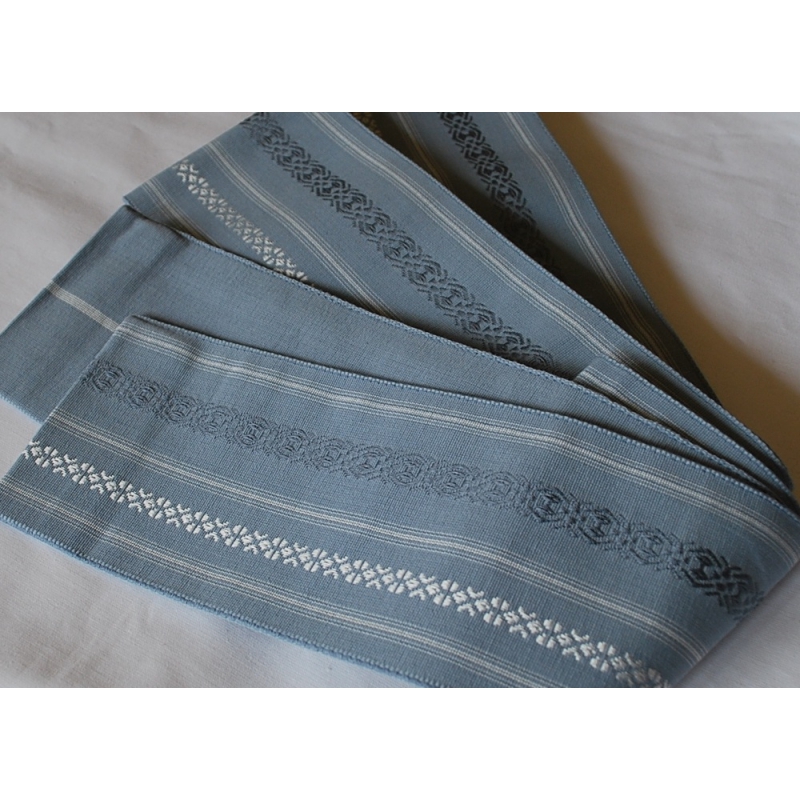
The Obi is a traditional Japanese belt worn over the waist and under the Hakama. The sword is held through the Obi while practicing, in the same way that the Samurai did while walking outside. There are modern black or white simpler styles of Obi, or more traditional ones, in cotton or in silk, called Kaku Obi.
|
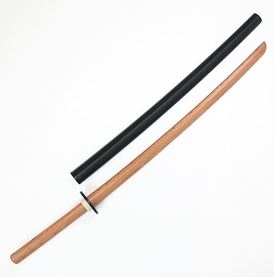
The Bokken or Bokuto (lit. wooden sword) is a red or white oak wood reproduction of the Katana and it is used for practice during the first months, as well, often, to demonstrate the "riai" or "story" behind a specific Iaido form in complete safety. It can cost from about 100$ to over 300$ in specialised shops.
|
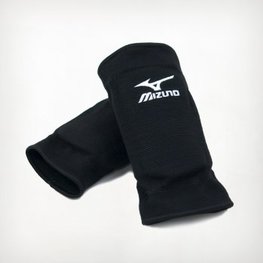
Knee protectors are extremely important in Iaido, because of the large number of forms that, especially in the ancient Muso-Shinden-Ryu, either start or end in a kneeling or sitting position. They are usually inexpensive and relatively easy to find.
|
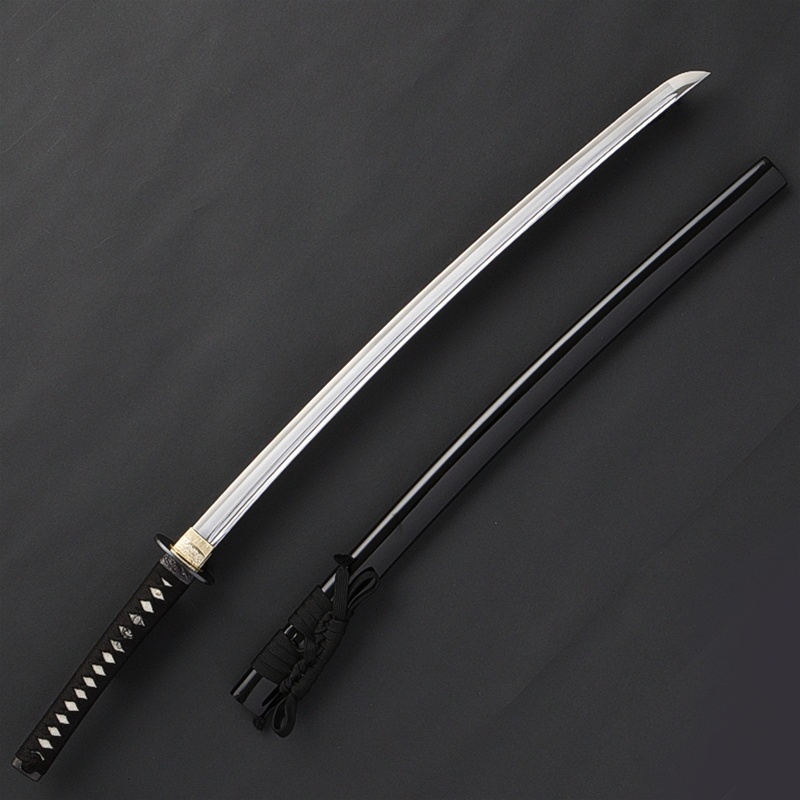
The Iaito or Mogito is a faithful reproduction of the Katana, the traditional Japanese Sword, specifically developed for Iaido practice up to higher level ranks. It is made of metal (usually a zync-alloy, or rhodium-aluminum alloy), it is not sharp, and it cannot be sharpened. It does however have a tip, so it must be always handled as a "live" sword. They come in different weight and sizes depending on the level of experience, sex and fitness of the practitioner. It can cost anywhere from 150$ for an entry level sword and up to even 1500$ for custom-made expert level ones with precious decorative elements. Most practitioners spend their whole life training and studying using a Iaito.
|
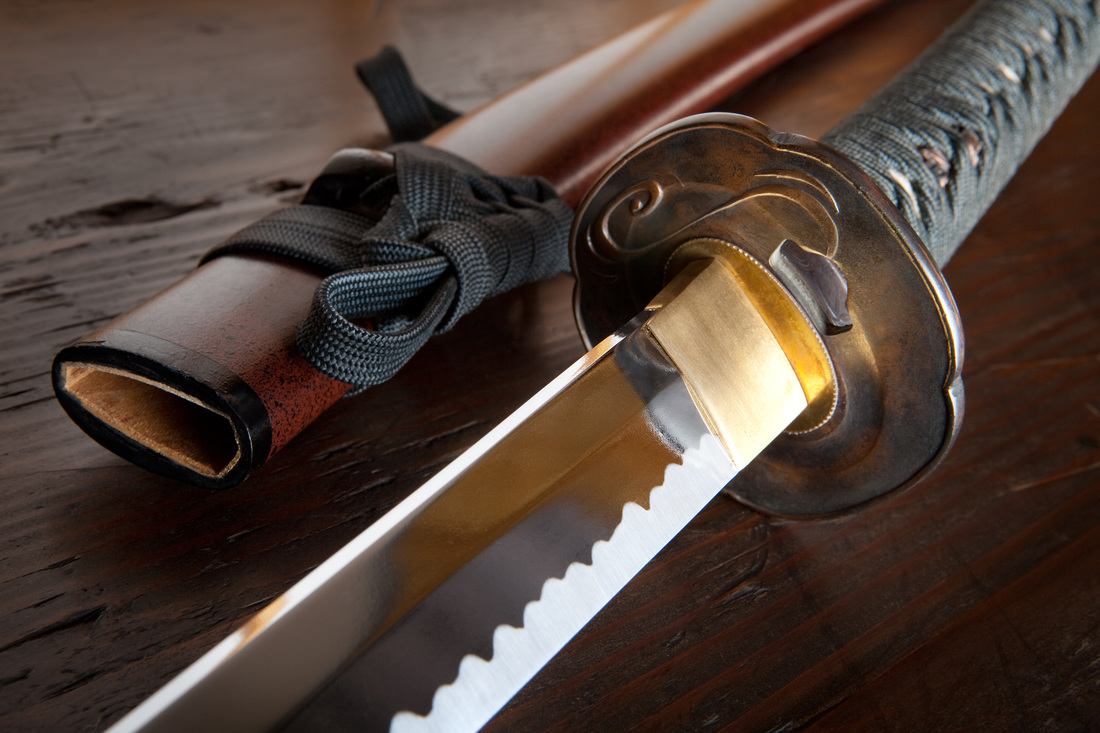
The Katana or Shinken is by many considered the best sword ever made. Handmade by several selected and scarce craftsmen in Japan, it is made of thousands of layers of tempered steel, honed to a shiny polish and razor-sharpness. It is used in Iaido practice after a high level of experience is attained and will give a whole another push to the focus each person needs to apply constantly. Costs normally start from 5500$ up to and possibly over 20000$. It is not mandatory and in some Countries it is forbidden to own or use, and in general, fewer practitioners use a Katana or Shinken in everyday Iaido practice.
|
LEGAL NOTICE (updated OCTOBER 2019): Singapore Law allows the purchase and ownership of a Iaito or a Shinken, both considered "swords" by the current Singapore Police Force's interpretation of the ruling. However, when importing/exporting one from abroad a special (but relatively quick and inexpensive to obtain) "Import/Export Licence" is now required, even if the "sword" is blunt, cannot be sharpened, is decorative and for sport purposes only (we have been told that even the flimsier Tai-chi/Wu-Shu weapons are to be licensed now, for example); the application must be done on the new LicenceOne website and its outcome is subject to the Singapore Police Force approval. Kindly notice that under NO circumstance a Iaito or a Shinken or any sword-like object for that matter can be carried, even in closed/sealed bags, while using the Public Transportation System (MRT/Bus etc.) or walking in crowded areas. For storage purposes it is possible to use a free locker room in the Dojo, where the training equipment can be safekept (although at the owner's exclusive risk). We are always available to help and give our counsel on any of these regulatory matters, and we try, when possible, to keep updated with the local Authorities guidelines.
For any other information, for joining the courses or contact us please write to: [email protected]
You can also Call/SMS/WhatsApp the number: +65 82398189 (Jack)
You can also Call/SMS/WhatsApp the number: +65 82398189 (Jack)
